Be yourself; Everyone else is already taken.
— Oscar Wilde.
This is the first post on my new blog. I’m just getting this new blog going, so stay tuned for more. Subscribe below to get notified when I post new updates.
Our Solar System
Be yourself; Everyone else is already taken.
— Oscar Wilde.
This is the first post on my new blog. I’m just getting this new blog going, so stay tuned for more. Subscribe below to get notified when I post new updates.
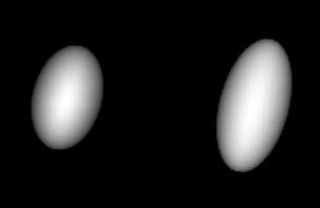
Shown above is arguably one of the most unique objects in our solar system. Located in The Kuiper belt, this dwarf planet was named after the place where researchers discovered it, Hawaii. What makes this dwarf planet special is its peculiar shape, giving it the nickname “santa”. But why is this one planet shaped like a football while the rest are spherical? The answer lies in its speed of rotation. Astronomers theorize that Haumea was most likely hit by something very very hard in its past (most likely an icy comet), causing it to spin at an extremely high rate. Astronomers observed that the face of the object was getting brighter and dimmer every 2 hours, corresponding to a rotation period of just 4 hours! For something the size of Pluto, this makes it the fastest spinning body in the solar system. Just like how Earth is somewhat egg-shaped due to its speed of rotation, Haumea has seen extreme stretching due to its much higher speed.
The name Haumea is the name of the Hawaiian goddess of childbirth. This name was fitting due to some other unique qualities about the dwarf planet. While several other objects in the Kuiper belt have satellites, Haumea’s are different. All other satellites discovered in the Kuiper belt are typical small bodies captured by a larger body. Haumea has two sattelites (only Kuiper belt object to have more than one), and they are both made of rock and ice. This suggests that the planet was in fact hit by a comet many years ago, and some of the shards stayed to become satellites. The names of the satellites are Hi’iaka and Namaka, making Haumeas namesake perfect: As the Hawaiian goddess of childbirth, she gave birth to many other Hawaiian deities (including Hi’iaka and Namaka), which were parts of her own body that she tore off to become them!
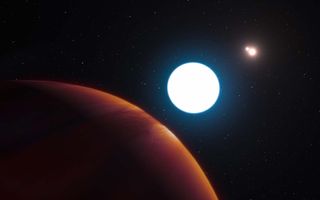
Growing up on earth with a singular sun, it is hard to imagine what life would be like with two (like the planet Tatooine in Star Wars) or more. In fact, many systems have been discovered with two suns and one was named in fact Tatooine. Furthermore, the planet HD 131399 was just discovered orbiting around three stars, but it by no means represents the limit on the number of suns possible for a solar system. Kaitlin Kratter, a computational astrophysicist at the University of Arizona, says the limit depends on a hierarchy that becomes much more difficult with multiple suns as the orbits become more complicated to balance. She says the thing that gives planets like HD 131399 the ability to orbit around three stars is its relative locations to each. As with most discovered planets that orbit around three stars, HD 131399 is close to its “primary star” (90 AU away) and is relatively far from a binary pair that account for the planets other two stars (~300 AU from each). As a result, the planet is being pulled so hard by its primary star that the gravitational force it feels due to the binary pair is negligible in comparison. Still, it is possible for planets like HD 131399 to eventually be ejected from the system and become a free-floating planet, suggesting that these multi-star planetary systems may be main source of free-floating planets.
As for how these planets become wedged in these crazy, complex orbits, Kratter has multiple theories. For one, many of these planets are huge (HD 131399 is 4 times the size of Jupiter). This suggests that they could have been formed when the three stars were formed, making it more like a four star system where one wasn’t big enough to become a star and therefor stayed large ball of gas. The other theory is that this planet eventually absorbed other planets orbiting the stars, gaining their mass.
As for the original question, it is hard to theorize the limit on how many suns a planet can have in any system. Kratter says the theoretical limit beyond which stars become unbound is between 10,000 and 100,000 AU, meaning that many single star systems still interact slightly with other stars or binary pairs. With this in mind, there is technically no limit to how many suns a planet can interact with in its orbit. Crazy!
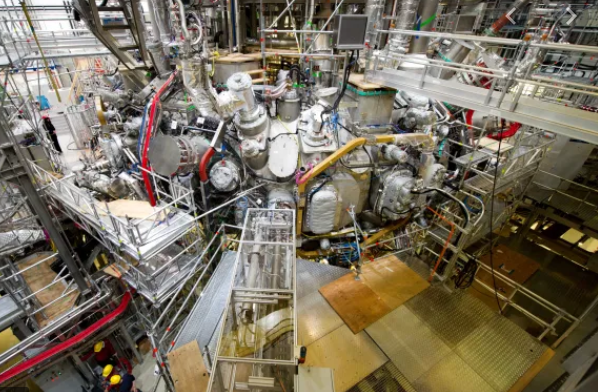
Nuclear power has always been an interesting field to me, causing me to take the class “Nuclear Power” here at Vanderbilt with Dr. Strauss. In the course we cover both fission and fusion, and when we discuss nuclear power for energy generation it was almost entirely about fission. Fusion technology has really only been mastered thus far for its use as a weapon. This is a shame because the availability of the raw materials needed for fusion are much more abundant than those needed for nuclear fission. Furthermore, the nature of fusion yields the possibility for much more energy generation.
While the research on nuclear fusion is still a couple decades out on producing a viable nuclear fusion power generator, it is important to consider that it will still just be one of many complex answers to the energy crisis. Slowing down the effects of global warming won’t look like one new technology that will save mankind; but instead a vast array of different and unique partial answers that will together provide us the possibility of having a small carbon footprint. Nuclear fusion will hopefully be one of these small answers that will give humanity more freedom from fossil fuels.
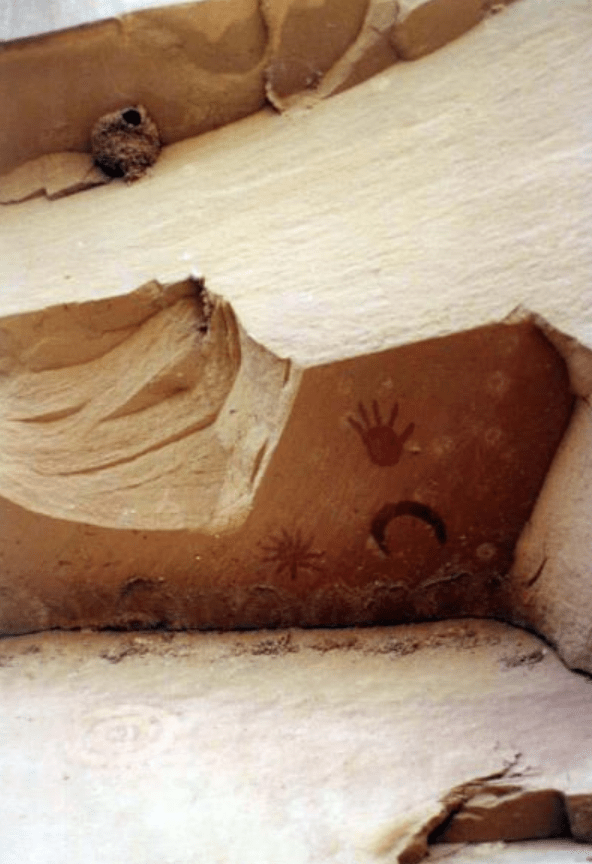
Shown above is the Supernova Pictograph in Chaco Canyon, New Mexico. This is a really interesting piece of archeoastronomy for me because I saw this pictograph in real life with my dad. The artwork is said to depict a supernova that occurred in 1054 AD and would have been visible in the New Mexico sky during 23 days and 653 nights. The pictograph is placed on a horizontal overhang on an east facing wall, 500 meters from the northeast corner of Penasco Blanco. The crescent moon depicts the moon that would have occurred on July 5th, 1054. Calculations of the placement of the supernova in relation to the moon on the night it occurred places the moon at the correct position depicted in the artwork. It was a really cool piece of art to see because it is very vivid and painted in striking red, which is definitely rare for pictographs in the regions. Most are much more faded and painted in black. I feel like this shows just how crazy the supernova must have looked in the sky back then. Its hard to imagine the impact that an event like this would have had on life and culture back in a time when observing the stars was seen as looking into the heavens.
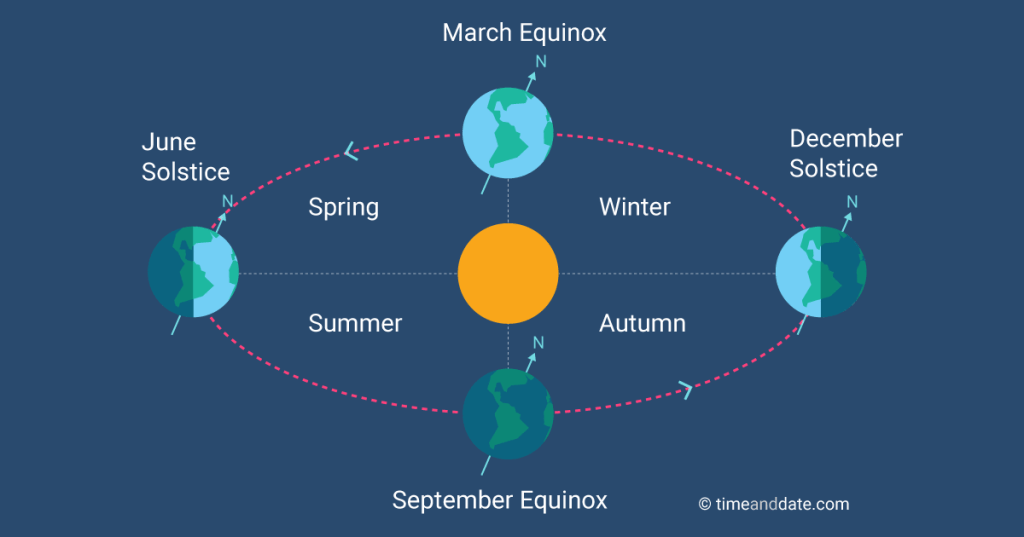
Two solstices occur every year, one on June 21 and one on December 21. These are the two points on the ecliptic at which the distance from the celestial equator is maximized. As shown in this video , the summer solstice is the first day of summer and also the longest day of the year. This can be thought of as the day where the spot on the earth is tilted most towards the sun. Conversely, the shortest day of the year is called the winter solstice. The dates of the solstices and their seasonal names are flipped for the northern and southern hemispheres.
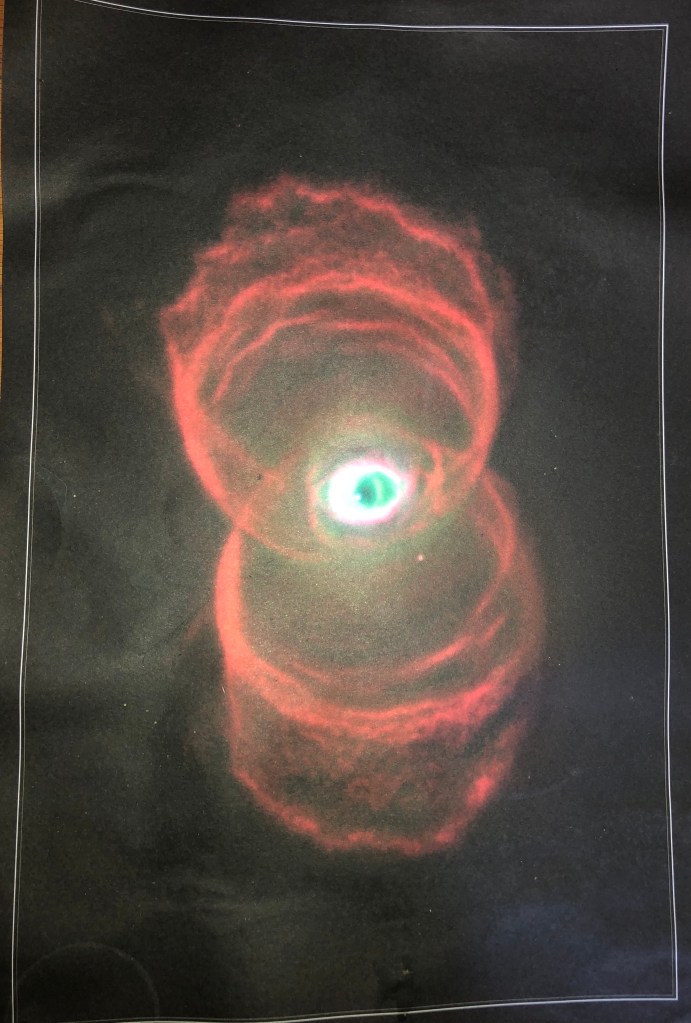
I chose the picture above of a poster I have that shows a photo taken by the Hubble Space Telescope of the Hourglass nebula. I’ve had this poster since high school and its always been my favorite due to its interesting eyeball figure and many colored rings. The picture actually shows MyCn18 , a young planetary nebula that is located about 8000 light years away. This photograph was another instance of the Hubble Space Telescope greatly increasing the understanding of space phenomena
This is an example post, originally published as part of Blogging University. Enroll in one of our ten programs, and start your blog right.
You’re going to publish a post today. Don’t worry about how your blog looks. Don’t worry if you haven’t given it a name yet, or you’re feeling overwhelmed. Just click the “New Post” button, and tell us why you’re here.
Why do this?
The post can be short or long, a personal intro to your life or a bloggy mission statement, a manifesto for the future or a simple outline of your the types of things you hope to publish.
To help you get started, here are a few questions:
You’re not locked into any of this; one of the wonderful things about blogs is how they constantly evolve as we learn, grow, and interact with one another — but it’s good to know where and why you started, and articulating your goals may just give you a few other post ideas.
Can’t think how to get started? Just write the first thing that pops into your head. Anne Lamott, author of a book on writing we love, says that you need to give yourself permission to write a “crappy first draft”. Anne makes a great point — just start writing, and worry about editing it later.
When you’re ready to publish, give your post three to five tags that describe your blog’s focus — writing, photography, fiction, parenting, food, cars, movies, sports, whatever. These tags will help others who care about your topics find you in the Reader. Make sure one of the tags is “zerotohero,” so other new bloggers can find you, too.

 Astr2110